RV Rental Near Rocky Mountain National Park in Fort Collins, CO
Every June I get the same call: “We want to drive into Rocky Mountain National Park with our RV and stay the night inside the gates.” So let me save you the disappointment up front — a Rocky Mountain National Park RV rental does not mean parking your rig overnight at a hookup site inside the park. The two RV-friendly campgrounds in the park near the Estes Park side, Moraine Park and Glacier Basin, are dry campgrounds with no electric, water, or sewer hookups, and they have length limits that rule out a lot of trailers and motorhomes. After years of delivering rigs around the Front Range, the play I set up for almost every guest is simple: rent the RV, base it at a full-hookup campground down the hill, and run up US-34 or US-36 into the park for the day.
Why I Set You Up Outside the Park, Not Inside
The in-park campgrounds are beautiful, but they’re a tough match for a comfortable RV trip. No hookups means you’re running on battery and your fresh/gray tanks the whole time, and the timed-entry reservation system the park uses in summer means even getting in with a big rig during peak hours is a planning exercise. The honest, easier vacation is to camp where you’ve got power and water — Estes Park and the canyons below it — and treat the park itself as your day playground for Trail Ridge Road, Bear Lake, and the elk in Moraine Park meadow. You sleep with the AC and a real shower; you spend your daylight hours in the park. That’s the version of this trip people actually come home raving about.
Where I Actually Recommend You Base
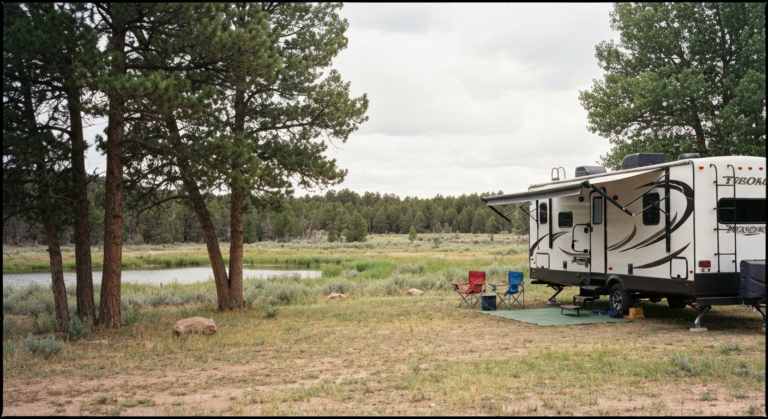
For the shortest drive into the park, the commercial RV resorts right around Estes Park put you minutes from the Beaver Meadows and Fall River entrances. If you’d rather camp in the canyon and don’t mind a longer morning drive, the Cache la Poudre options off CO-14 — Mountain Park Campground, Ansel Watrous, and Stove Prairie — are some of my favorite quiet spots in the whole region, though they’re better suited to smaller, self-contained rigs. Closer to my home base in Fort Collins, Horsetooth Reservoir and Lory State Park give you reservoir camping with a bigger drive to the park but a much shorter one to Old Town and the breweries. I’ll talk through the trade-offs with you when you book, because the right base depends on whether you’re chasing the park, the water, or both.
How Delivery and Setup Works
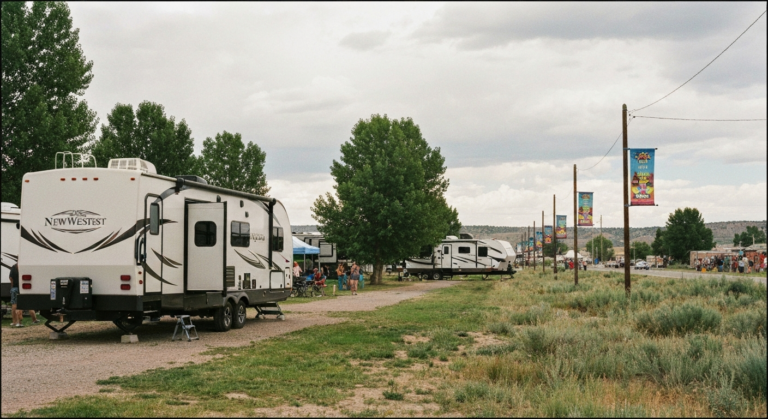
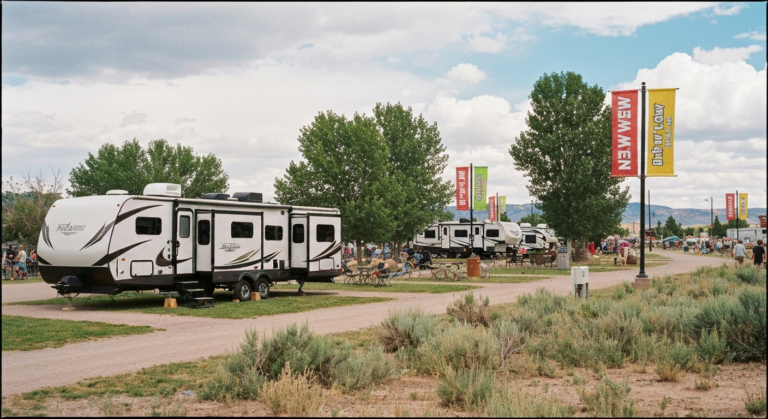
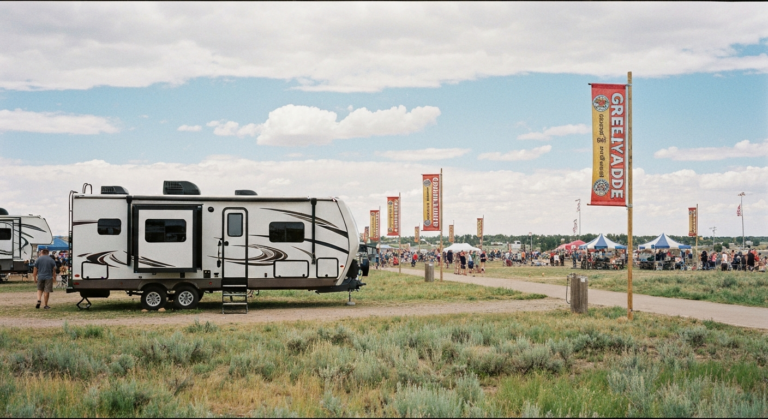
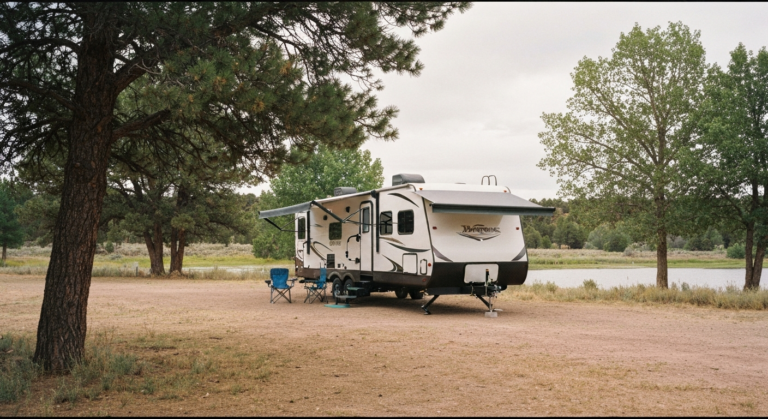
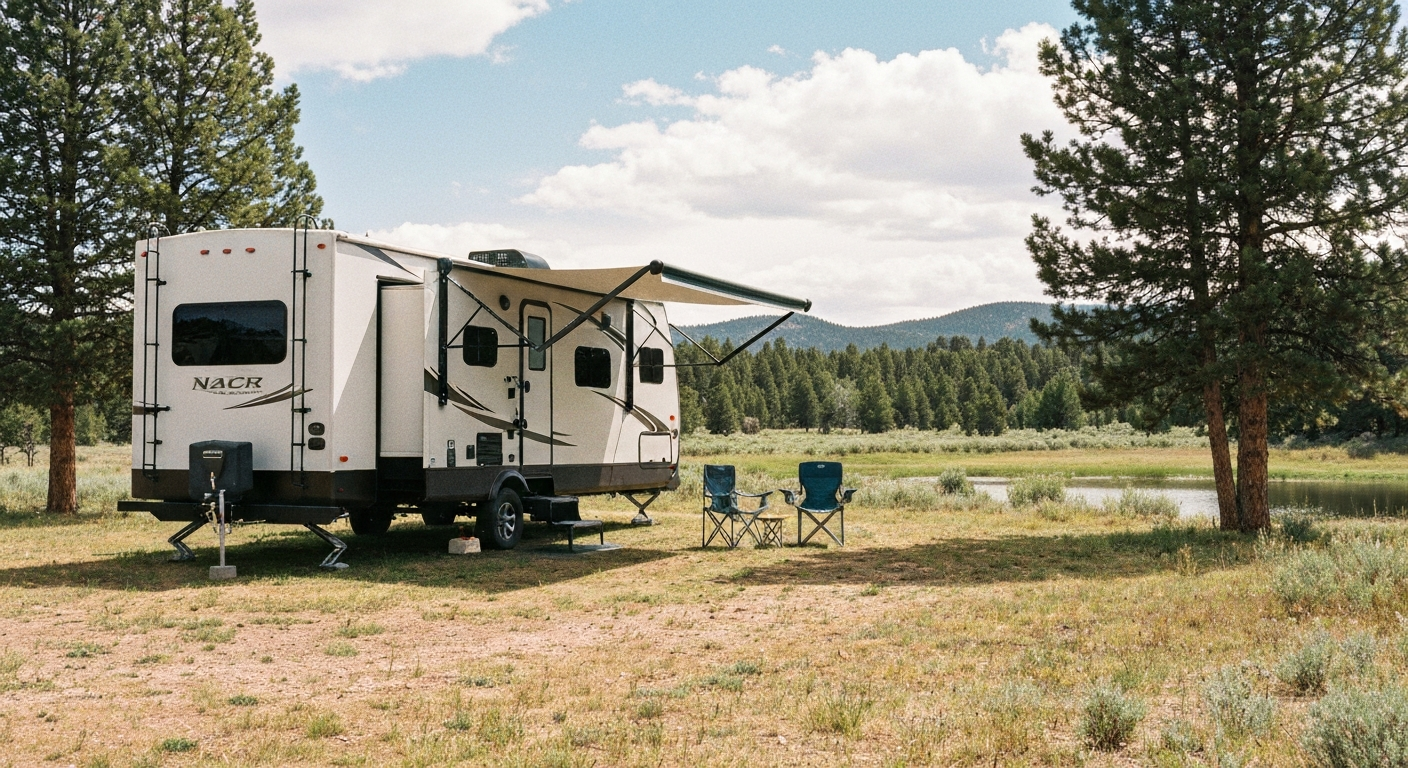
This is the part that makes the whole trip easy: you don’t tow anything and you don’t back anything into a site. I deliver the RV to your campground, level it, hook up power, water, and sewer where the site has them, and walk you through how everything runs before I leave. When I drop a rig at the Horsetooth sites, the loops can be tight and a couple of the back-in spots are short, so I match the trailer to your actual reservation rather than handing you something that won’t fit. Up the Poudre Canyon, the campsites get smaller and the turns sharper, so I steer those guests toward more compact rigs on purpose. You show up, your home base is already standing, and you point the car up the hill to the park. At the end, I come back and haul it all out — no dump station, no hitch, no stress.
When to Book and What the Weather Does
Summer in the park is the busy season for a reason, but the mountain weather is its own animal. Even in July and August, afternoon thunderstorms roll over the high country almost daily — I tell everyone to hit Trail Ridge Road and the alpine stops in the morning and be heading down by early afternoon. Nights at Estes elevation and in the canyon get genuinely cold even in midsummer, so the furnace earns its keep. Trail Ridge Road typically isn’t fully open until late May or even early June and closes again with the first heavy snows in fall, so if a high-alpine drive is the whole point of your trip, aim for that June-through-September window. For summer weekends and anything near the Fourth of July, book the RV and your campsite as far ahead as you can — sites near the park fill fast, and the park’s timed-entry permits go quickly too. Late September brings the elk rut and the aspens turning gold, which is my personal favorite time to send people up there.
What to Know Before Your Park Day
- Timed-entry reservations: The park runs a timed-entry permit system in the busy months on top of the standard entrance fee — sort yours out at recreation.gov before you arrive, separate from your RV booking.
- Drive your car, not the RV: Since you’re based outside the park, leave the rig set up at the campground and take your vehicle up. Bear Lake Road parking fills early; the morning park-and-ride shuttle from the Glacier Basin lot saves a lot of headaches.
- Hookups vary by campground: Full hookups at the Estes-area resorts, none at the in-park sites, and partial at some state and county parks. Tell me where you’re staying and I’ll confirm what’s available.
- Mind the altitude: You’ll feel the elevation on Trail Ridge — drink water, take it slow your first day, and pack layers because temps swing hard between the trailhead and the alpine tundra.
- Wildlife is everywhere: Elk, moose, and bighorn are common, especially at dawn and dusk in Moraine Park and Horseshoe Park. Keep your distance and never feed them.
- Fuel and groceries down low: Stock up in Fort Collins, Loveland, or Estes Park before you head up — options thin out fast once you’re in the high country.
Let’s Plan Your Trip
If you’re putting together a Rocky Mountain National Park trip and want the easy version — no towing, no setup, a comfortable home base with real hookups and a day pass to one of the best parks in the country — that’s exactly what I do all summer. Take a look at the browse the fleet to see what I deliver across the Northern Colorado (NoCo) / Front Range area, and check my guide to local campgrounds and RV parks to help pick your base camp. When you’re ready, call or text me at 267-225-0951 or email [email protected] and we’ll get your rig matched to the right site.