RV Rental Near Roosevelt National Forest in Fort Collins, CO
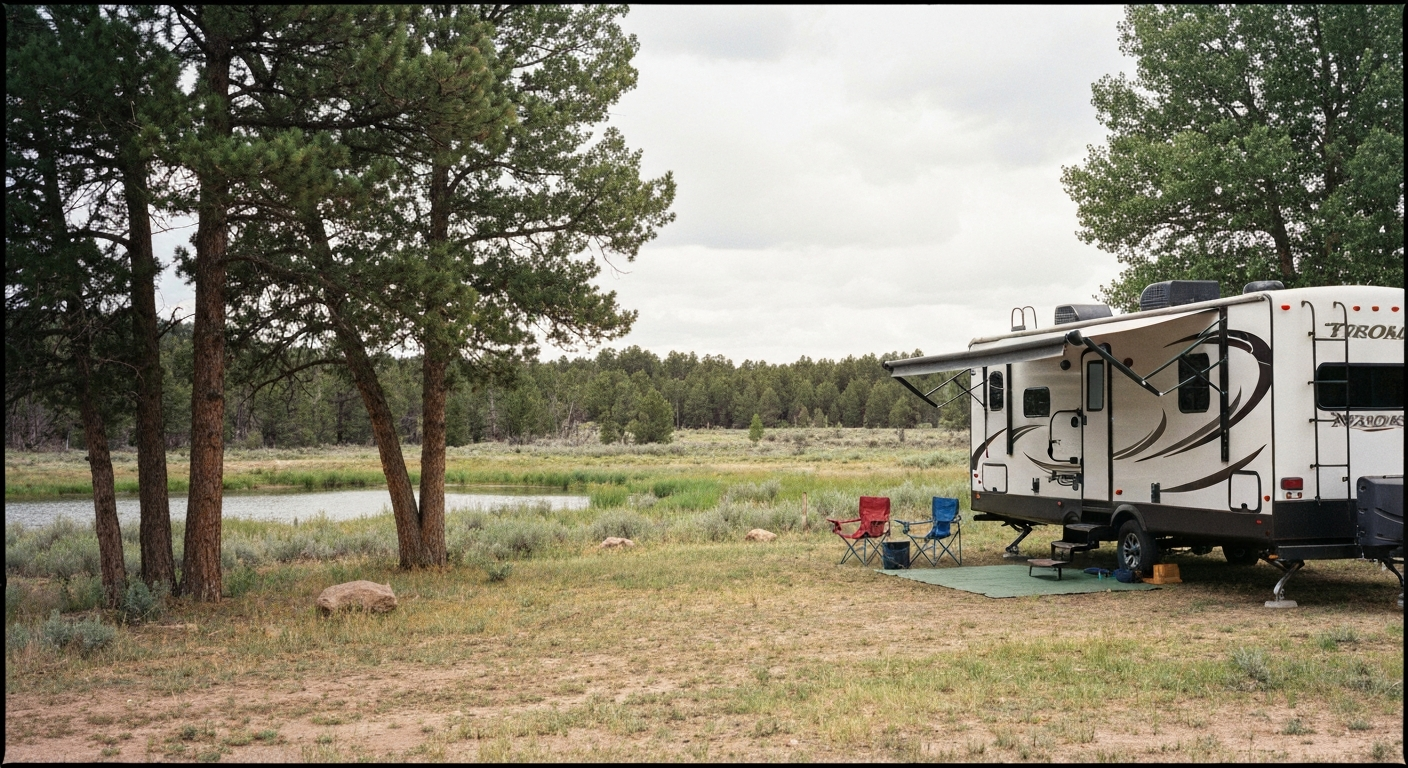
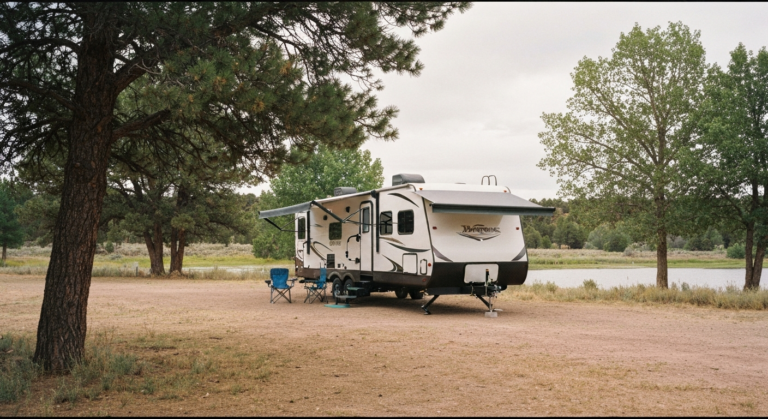
Every summer I get a version of the same call, usually from someone sitting at a desk in Fort Collins or Loveland who just realized they’ve been staring at I-25 traffic for too long: “I want to spend a week up in the Poudre Canyon or around Cameron Pass — can you drop an RV somewhere up there?” My answer is always yes, and it starts with a conversation about Roosevelt National Forest RV rental that covers more than just the rig. It covers where you’ll actually sleep, which forest roads you can reach with which trailer length, and what the weather in the high country does in late July that nobody mentions on a tourism website. I’ve been delivering and setting up rigs across Northern Colorado for years, and Roosevelt — stretching from Poudre Canyon up CO-14 all the way to the Medicine Bow range — is one of the areas I know in real detail.
What Roosevelt National Forest Actually Is (and What That Means for Your RV Trip)
Roosevelt National Forest is not a single destination — it’s roughly 800,000 acres of national forest land broken into several ranger districts, and the majority of it accessible from Fort Collins runs along CO-14 through Poudre Canyon and then up toward Cameron Pass. There are primitive dispersed camping sites scattered throughout the forest, and there are developed campgrounds managed by the Forest Service, but the honest answer to “can I get a full-hookup RV site inside Roosevelt National Forest?” is almost always no. The Forest Service campgrounds in this corridor — places like Stove Prairie Campground, Mountain Park Campground, and Ansel Watrous Campground along the Poudre — are tent-and-small-trailer setups with vault toilets, fire rings, and no electrical or water hookups. Some of them have tight entrance roads that I genuinely would not take a large fifth wheel into. Stove Prairie, for example, sits off Stove Prairie Road above the canyon floor, and the turn radius getting into certain loops there is not friendly to rigs over about 25 feet.
So here’s the approach I recommend to nearly everyone who calls asking about a Roosevelt National Forest RV rental: base yourself at a full-hookup campground close to the forest entrance, and day-trip into the forest from there. You get the comfort of shore power, fresh water, and a dump station at night — and you spend your days exactly where you want to be, hiking, fishing the Poudre, or driving up toward Cameron Pass. It’s genuinely how I’d do it myself.
Where I Recommend Basing Your Rig: Ansel Watrous and Mountain Park as Day-Use Anchors, Horsetooth or Boyd Lake for Hookups
For the full-hookup base camp experience, the two campgrounds I steer people toward most often are the Horsetooth Reservoir campgrounds managed by Larimer County and Boyd Lake State Park in Loveland. Both have electrical hookups, water, and dump stations. Boyd Lake is the easier drop for me logistically — the entry road is wide, the sites are clearly marked, and I can get a longer trailer in without drama. Horsetooth’s campgrounds vary quite a bit by loop; the sites along the eastern shore closest to the dam entrance tend to run shorter, so I’ll match a smaller trailer there, something in the 22–26 foot range rather than the big bunkhouse units. I always confirm the site length with the customer before I load the rig.
From either of those bases, you’re looking at roughly 25–35 minutes to reach the mouth of Poudre Canyon on CO-14 heading west out of Fort Collins. The drive itself is worth noting: CO-14 through the Cache la Poudre corridor is a National Scenic Byway, and once you leave town the canyon closes in fast. You’re in Roosevelt National Forest territory well before you reach Mountain Park Campground, which sits right on the river at about mile marker 47. That campground makes an excellent day-use picnic and fishing stop even when you’re based lower. Ansel Watrous, a few miles further up-canyon, is one of my favorite spots to point first-timers toward — it’s right on the Poudre, shaded by cottonwoods, and not as heavily visited on weekday mornings.
Seasons and Weather: What the High Country in Roosevelt Does to Your Trip Planning
I have this conversation with customers constantly, and I’d rather have it here so you’re prepared before you call. Roosevelt National Forest spans a huge elevation range — from around 5,500 feet near the Poudre Canyon floor to over 12,000 feet near Cameron Pass. That matters for RV trips in ways that aren’t obvious.
June is the month I get the most calls, and it’s also the month I most often have to talk people through what to expect. The high country around Cameron Pass — elevations above 10,000 feet — can still have significant snow in early June. CO-14 over Cameron Pass typically opens fully by late May or early June, but afternoon thunderstorms are a near-daily occurrence by mid-June through late July. I’m not exaggerating when I say you can have a clear, warm morning at Ansel Watrous and a violent lightning-and-hail storm at 3 p.m. on the ridge above you. Plan your hikes for mornings.
July and August are the peak weeks. The canyon floor stays comfortable, the fishing on the Poudre is excellent once runoff settles (usually by late June or early July depending on the snowpack year), and the wildflower bloom above 9,000 feet is genuinely spectacular. This is also when I’m busiest — if you’re thinking about a summer trip, call or email well ahead of your dates. I book out fast in July.
September is honestly my personal favorite month to be up there. The aspens on the slopes above Poudre Canyon start turning by mid-September, elk rut is underway, and the crowds thin noticeably after Labor Day. The weather is more stable — cooler nights (mid-30s°F at elevation is not unusual in late September, so I’ll make sure the rig you’re in has adequate heat), warm afternoons, and far fewer afternoon thunderstorms than midsummer. If you have flexibility in your schedule, September is the answer.
How RV Delivery to Your Campground Actually Works from Fort Collins
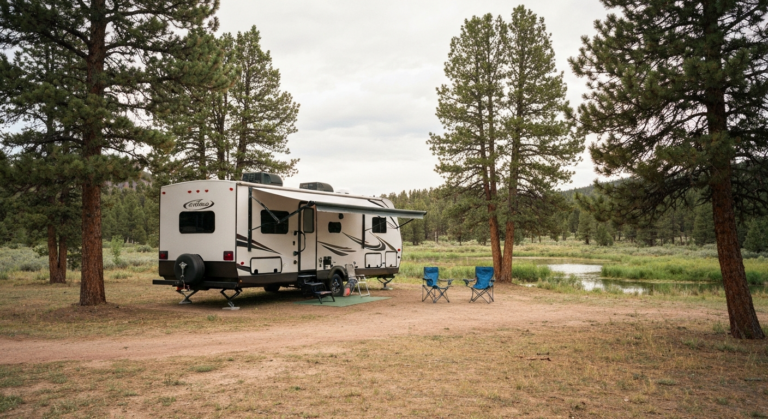
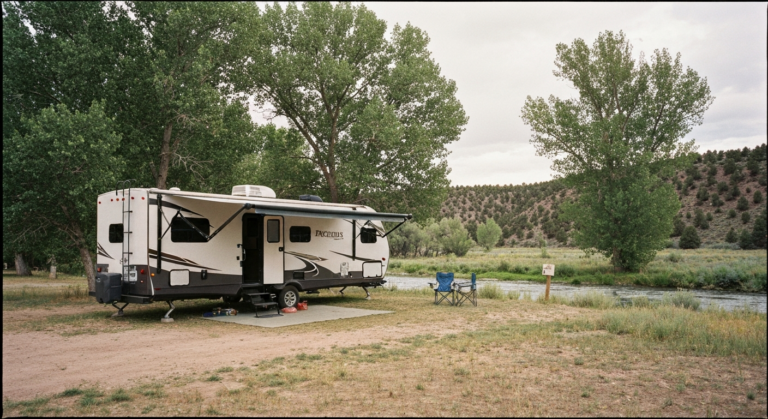
When someone books a Roosevelt National Forest RV rental through Fireside, I handle delivery and setup myself — I’m not dispatching a stranger. For a base camp at Horsetooth or Boyd Lake, delivery is straightforward: I load the rig at our staging location, run it out, back it into your site, level it, connect shore power and water, do a full walkthrough with you, and leave you ready to go. The whole setup usually takes under an hour once I’m on-site.
For customers who want to base further up the canyon — and occasionally someone does want to stay at one of the Forest Service campgrounds with a smaller rig — I’ll talk through the specific site dimensions and road conditions before we commit to that plan. I’ve driven CO-14 enough times that I know where the road narrows, where the pullouts are, and which campgrounds I’m comfortable taking which trailer sizes into. That conversation happens before you pay a deposit, not after.
One thing I always make sure customers understand: the inclusions on any specific rig — generator availability, bedding, kitchen setup — vary by unit. Don’t assume. When you call or email, I’ll walk you through exactly what the unit you’re looking at comes with so there are no surprises when I drop it off.
What to Do Once You’re Based and Ready: The Roosevelt National Forest Highlights Worth Your Days
With a solid base camp at Horsetooth or Boyd Lake and an RV to come back to each evening, here’s how I’d prioritize the Roosevelt corridor if I had a week:
- Cache la Poudre River fishing and floating: The Poudre is Colorado’s only National Wild and Scenic River, and the stretches between Fort Collins and Rustic hold brown and rainbow trout. The stretch near Mountain Park Campground is consistently productive on early mornings. Bring a Colorado fishing license — wardens do check up here.
- Young Gulch Trail: One of the most-used day hikes in the lower canyon, accessible right off CO-14 with a pullout parking area. About a 5-mile round trip, manageable for families. I recommend going on a weekday morning — the parking fills by 9 a.m. on summer weekends.
- Driving to Cameron Pass (elevation 10,276 ft): Even if you don’t hike, the drive up CO-14 from the canyon floor to Cameron Pass is one of the best scenic drives in Northern Colorado. Allow 90 minutes one-way from Fort Collins with stops. The Zimmerman Lake trailhead just below the pass gives you an easy walk to a stunning alpine lake.
- Stove Prairie area and Buckhorn Canyon: Less trafficked than the main Poudre corridor, the roads into the Stove Prairie area off US-287 north of Loveland give you access to quieter forest land. Good for mountain biking and dispersed exploration. Note: these roads are unpaved in sections and not suitable for towing your rental trailer up them — take your personal vehicle or a day-use vehicle for this excursion.
- Combining with Rocky Mountain National Park: Roosevelt National Forest borders RMNP to the south, and many customers use the same base camp for both. From Boyd Lake or Horsetooth, you’re about 45–50 minutes to the Fall River entrance at Estes Park via US-34. That’s a very manageable day trip. Just be aware that RMNP requires a timed-entry permit during peak summer months — book that permit well in advance through recreation.gov.
- September elk rut in the forest: If you’re here in mid-to-late September, the bugling elk in the meadows above the canyon are something I look forward to every year. You don’t need to go into the backcountry — pull off at one of the forest road pullouts around dusk and listen. It’s one of those experiences that makes Northern Colorado special in a way that’s hard to describe until you’ve heard it.
Booking Your Roosevelt National Forest RV Rental: When to Call and What to Have Ready
The questions I need answered to match you with the right rig are simple: your dates, how many people are sleeping in the RV, whether you have kids or dogs (yes, we work with that, just tell me upfront), and which campground you’re looking at for your base. If you haven’t picked a campground yet, that’s fine — I can point you toward the right option based on your trip plan and group size. I’d rather spend 10 minutes on the phone doing that right than have you end up at a site that doesn’t fit the rig.
For summer weekends and holiday weeks — Memorial Day, Fourth of July, Labor Day — I’d encourage you to reach out at least four to six weeks ahead. September trips have a little more flexibility, but not as much as you’d think; the fall color crowd is real and growing every year. You can reach me at 267-225-0951 or by email at [email protected]. I respond personally — you’re not going into a ticketing queue.
When you’re ready to look at what’s available, browse the fleet to see the units we’re running in the Northern Colorado (NoCo) / Front Range area right now — sizes, layouts, and features vary by unit, and I’ll match you to what makes sense for your trip and your base camp. And if you’re still sorting out where to set up, our campgrounds and RV parks guide covers the full-hookup options across the region in detail, including Horsetooth, Boyd Lake, and several others I know from firsthand delivery experience. Roosevelt National Forest deserves a real trip — let’s set it up right.